
What is Maritime Intelligence
Maritime intelligence is the ability to transform vessel, equipment, maintenance, operational, procurement and compliance data into clear decisions for fleet teams.
For many years, maritime organizations have collected large amounts of data, but that data has often remained fragmented. A vessel may have one system for planned maintenance, another for procurement, another for reports, another for documents, and many operational decisions still happen through email, spreadsheets or manual updates.
The next stage of maritime digitalization is not simply collecting more data. It is connecting the right data into an operational intelligence layer.
That is what maritime intelligence means.
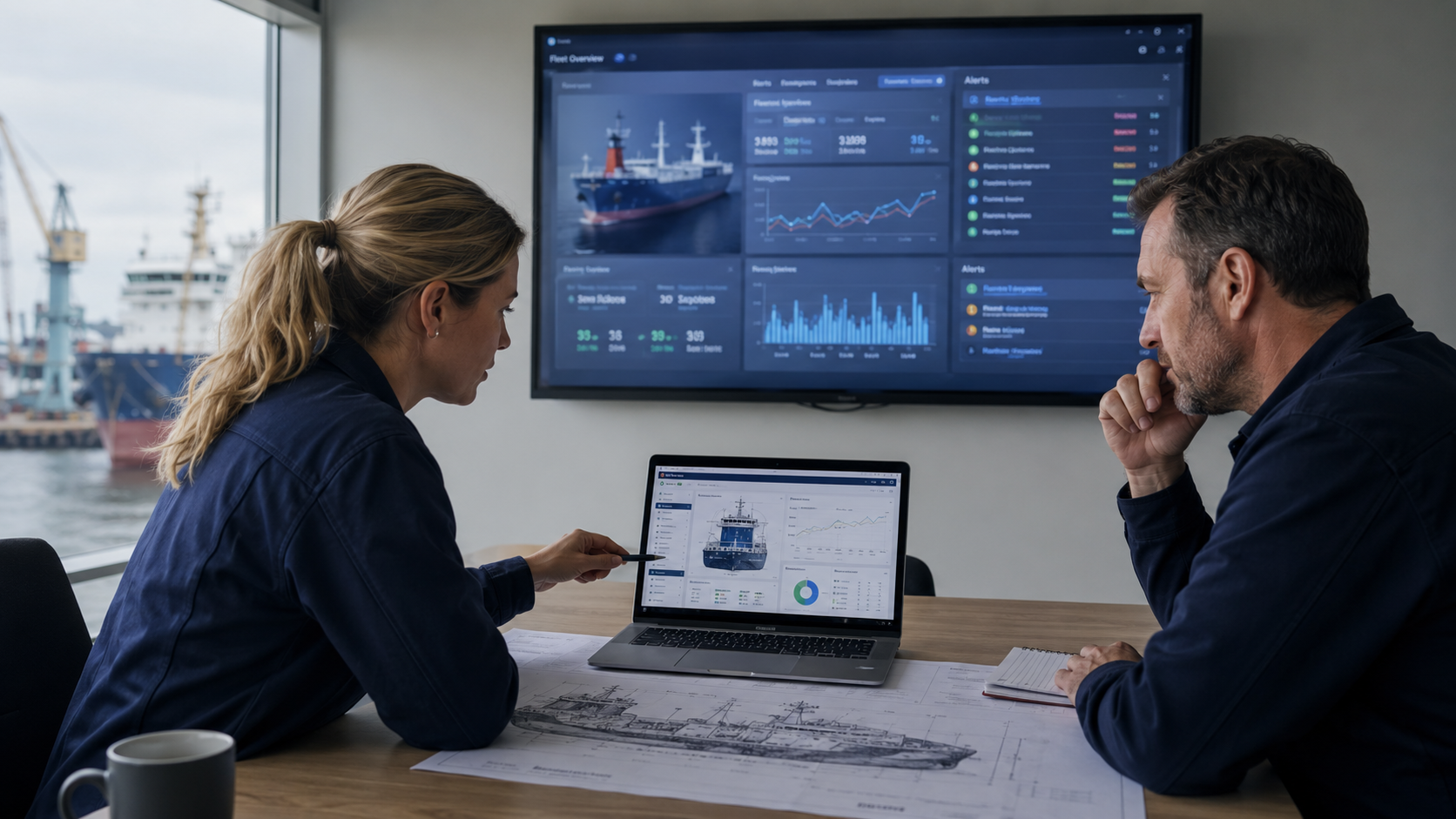
From Data to Decisions
A modern maritime intelligence platform should connect several layers:
vessel and equipment registers
planned maintenance schedules
running hours
work done reports
defects and events
spare parts and inventory
procurement workflows
technical reports
compliance evidence
predictive maintenance signals
AI-assisted fleet queries
When these layers are disconnected, fleet teams see only fragments. A technical superintendent may know that a task is overdue, but not whether the required parts are available. A procurement officer may see a spare-part request, but not whether the equipment is critical. A fleet manager may see reports, but not the emerging pattern across vessels.
Maritime intelligence closes that gap.
Why Maritime Intelligence Matters Now
The maritime sector is moving deeper into digital transformation. Lloyd’s Register describes maritime digitalization as a way to use automation, analytics and digital monitoring systems to improve fleet performance, supply-chain optimization and regulatory compliance.
At the same time, regulation and operational complexity are increasing. The ISM Code requires companies to identify equipment and technical systems whose failure may create hazardous situations and to create measures that ensure reliability.
This makes intelligence more important than dashboards alone. A dashboard shows information. An intelligence layer helps teams understand what requires attention, what risk is increasing, and what action should be prepared next.
Fleetcore’s View of Maritime Intelligence
Fleetcore is built around the idea that maritime AI becomes useful only when it is connected to real operational truth.
That means AI should understand vessels, equipment, PMS schedules, running hours, work done reports, spare parts, events, procurement and compliance records. It should not operate as a generic chatbot detached from fleet data.
The fleetcore platform connects these operational layers into one maritime intelligence platform: an AI-native system where technical teams can ask fleet questions, review risks, prepare actions and keep critical decisions human-approved and auditable.
The Future: Human-Governed Maritime Intelligence
The future of maritime operations will not be fully autonomous overnight. The more realistic path is human-governed intelligence.
AI and predictive models can help identify risk, prepare draft actions, summarize fleet status and recommend next steps. But in regulated maritime operations, humans must remain accountable for critical decisions.
That is the difference between automation and intelligence.
Automation executes.
Intelligence supports better judgment.
Fleetcore is building the maritime intelligence layer for that future.